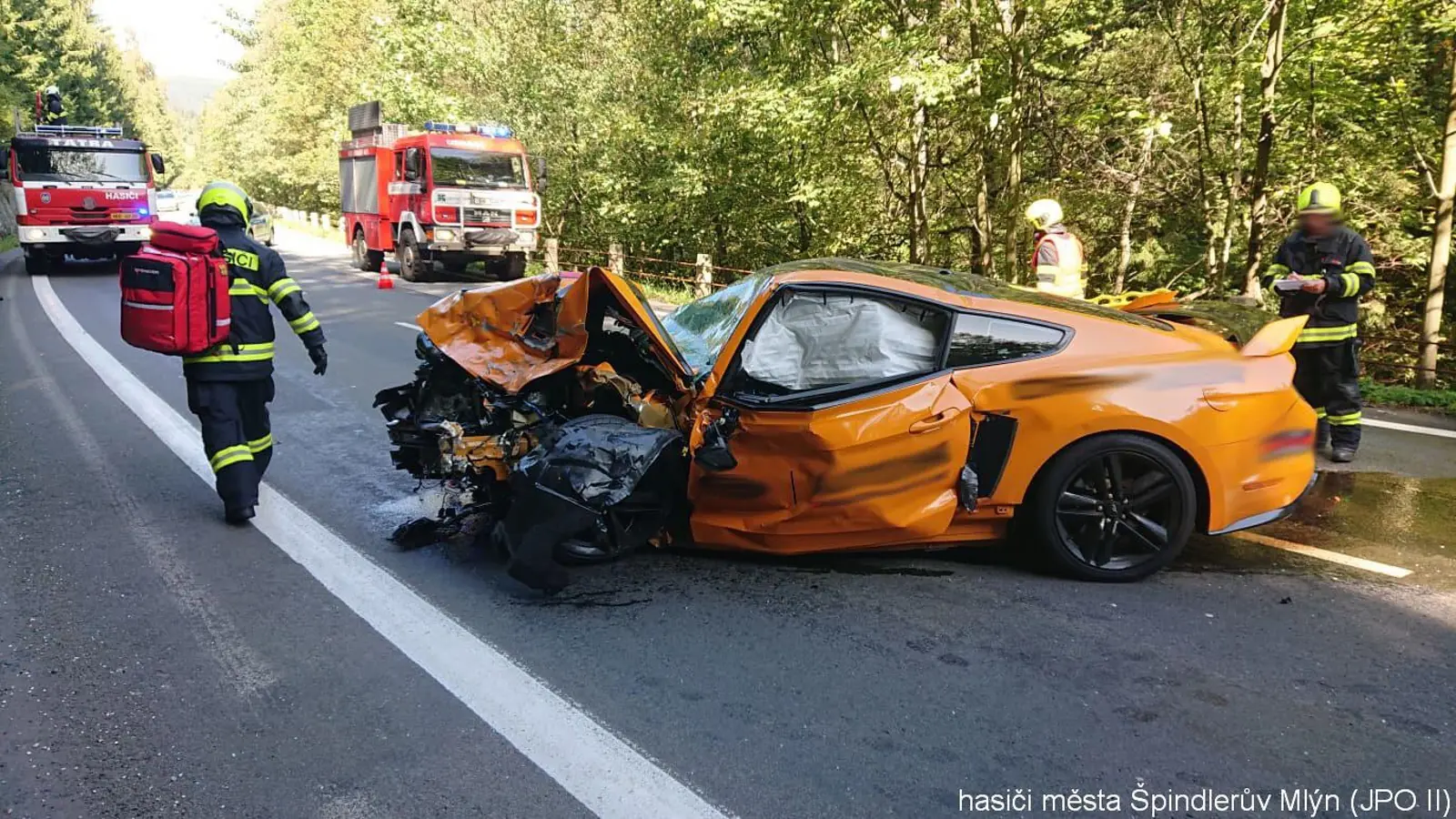


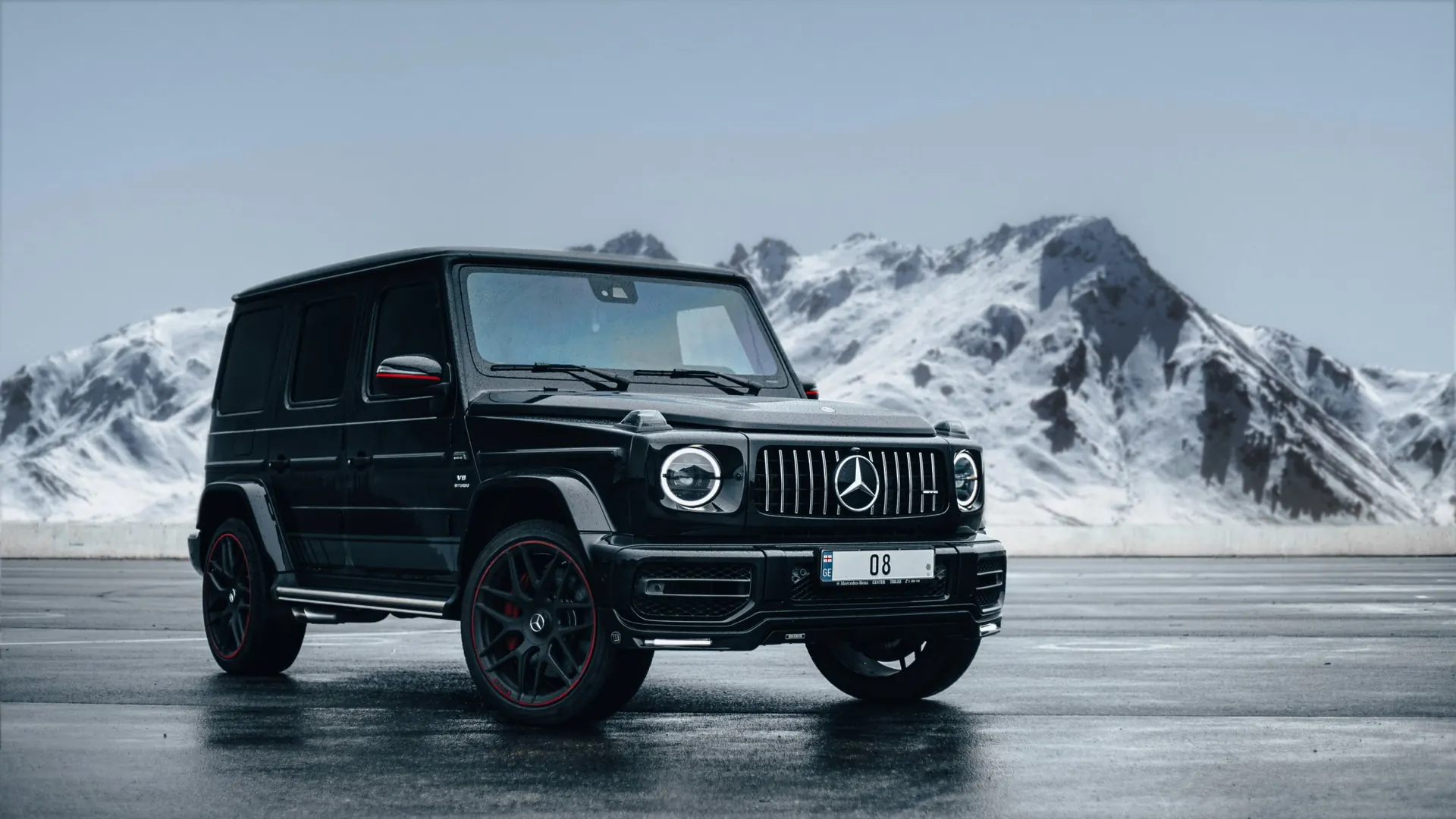

The Mercedes-AMG G63 has a reputation as a car that nothing can stop. Three differential locks, all-wheel drive and a look that even snowdrifts make way for. One of our customers took that quite literally. A winter road, a queue of traffic ahead of him and a snow-covered field alongside it. Why sit in a queue when you’re behind the wheel of a G63? The field let him go only a short way. Then came the ditch, the G63 came to rest in it, and only a tow truck brought it home.
All-wheel drive helps you get moving. It won’t stop you any sooner and it won’t carry you across a ditch. And that’s the whole secret of winter: a sports car can happily tackle the snow, you just need to know what to expect from each one.
All-wheel drive changes the rules
On snow, the winner isn’t the one with the most horsepower, but the one who gets more of it down onto the road. All-wheel drive splits the power between four tyres, so none of them spins up quite so easily. In practice, that means you’ll pull away up a snow-covered hill where a rear-wheel-drive car would just scrabble on the spot.
Most of the powerful cars in our fleet have all-wheel drive. But each is suited to something different.
For the mountains and the holiday cottage, take the Mercedes-AMG G63, the Tesla Cybertruck or the BMW X6 30d. They all sit high off the ground and a bit of snow under the bumper won’t faze them. The G63 also has differential locks for those moments when one wheel loses contact with reality. The X6, with its diesel three-litre and xDrive all-wheel drive, will make the trip to the mountains and back without any unnecessary fuel stops.
For the motorway run to Austria, the Mercedes-AMG GT 63 S or the Audi RS6 are the ones to go for. Both can cover 300 kilometres of motorway in comfort and with plenty of power in reserve for overtaking. The RS6 is also an estate, so it’ll swallow a week’s worth of luggage.
For the city and shorter trips, the VW Golf R or the Mercedes-AMG A35 are plenty. They’re compact, they have all-wheel drive, and on a snowy Prague street they enjoy pulling away more than most of the cars around them.
But one thing holds true for all of them. All-wheel drive brakes exactly the same as any other car on the same tyres. That’s a good reason to drive calmly, not faster. After all, just ask our customer with the G63.
Rear-wheel drive: a joy, but a measured one
The BMW M2 has 460 horsepower and sends all of it to the rear wheels. The Porsche Cayman GT4 MR has a mid-mounted engine and also drives only the rear axle. On dry tarmac, that’s exactly why you hire these cars. On snow, that same reason calls for a bit more feel in your right foot.
A rear-wheel-drive car doesn’t pull away quite so willingly in winter, and in a corner it’ll make it clear that the rear end has a mind of its own. That doesn’t mean it’s dangerous. It means it forgives fewer mistakes. On winter tyres and with stability control switched on, you can drive it safely, you just feed in the power gradually rather than all at once on the way out of a corner.
Our view is simple. If you’ve got a few winters under your belt and you know how a car behaves when the rear steps out, the M2 or GT4 MR on a mountain road in Austria is one of the best winter experiences you can treat yourself to behind the wheel. The car talks to you, you respond, and every corner counts. But if you don’t really know winter driving, go for all-wheel drive. We don’t recommend rear-wheel-drive cars to less experienced drivers for the mountains, and it’s not because of the car.
The same goes for the Alpine A110 GTS. It’s light, has a mid-mounted engine and rear-wheel drive, so for the winter city by all means, but not for the snowdrifts.
Tyres matter more than the drivetrain
All-wheel drive decides how much power goes to the wheels. But how much of it actually ends up on the road is decided by just four palm-sized patches of rubber touching the snow. That’s why one simple truth holds, one that plenty of drivers don’t like to hear: a rear-wheel-drive car on good winter tyres will brake and corner better on snow than an all-wheel-drive car on summer tyres.
The law sees it much the same way. In the Czech Republic, winter tyres are mandatory from 1 November to 31 March whenever there is wintry weather or it can be expected. Where there’s a “Winter equipment” sign, you must have them regardless of how the road happens to look. For cars up to 3.5 tonnes, the tread must be at least 4 mm, on all wheels and all the same. For summer tyres in winter, the police can hit you with a fine of up to CZK 2,000.
With us, you don’t have to worry about any of this. Every car in our fleet runs on winter tyres from 1 November to 31 March. That applies to the G63 just as much as the M2, and you don’t need to request anything or pay any extra. So if you’re looking for a rental company where you get a sports car already shod for winter, you needn’t ask twice.
But there’s one thing tyres won’t change. Even on the best winter rubber, the braking distance on snow is considerably longer than on dry roads. A winter tyre gives you a chance, not a guarantee. The rest comes down to keeping your distance and to your right foot.
To the mountains: Špindl or Austria?
For a classic mountain trip, where a well-maintained road and a few snowy hairpins up to the hotel await, we recommend the Mercedes-AMG G63 or the Mercedes-AMG GT 63 S. The G63 will handle anything you meet on the way to Špindlerův Mlýn. The GT 63 S, meanwhile, will carry four people to the Alps so quickly and comfortably that you’ll wonder where the whole day went.
If you’ve got winter driving well in hand and want to make a memory of the journey, try the BMW M2 or the Porsche Cayman GT4 MR on Austrian mountain roads. An empty corner above a valley, winter tyres and rear-wheel drive. You’ll remember this longer than the skiing itself. Just be aware that it really is for the experienced.
You can take our cars abroad, just let us know your route in advance. We’ll arrange everything needed so you have nothing to sort out at the border.
In Austria, the rules are stricter than here. Winter equipment is required there from 1 November all the way to 15 April, whenever there’s snow, slush or ice on the road. The tyres must be on all wheels and have at least 4 mm of tread. Where a sign requires it, you must fit snow chains on at least one driven axle and drive with them at a maximum of 50 km/h. For a breach that endangers others, the fine can reach up to EUR 5,000.
Watch out for April. We switch our cars to summer tyres from 1 April, but the Austrian requirement runs until the middle of the month. If you’re planning a spring ski trip to the Alps, schedule it for the end of March at the latest.
The Austrian motorway vignette isn’t included in the rental. Buy it in advance online as a digital one and you’ll save yourself a stop at the petrol station before the border.
Practical details
Chains can be hired, by arrangement, for an individual surcharge, with any car in the fleet. If you’re heading to Austria or into the mountains, where they may be mandatory, just ask for them when you book. And practise fitting them at home in the car park first. In the dark, in the cold and on the hard shoulder is a poor place to learn.
A convertible in winter? By all means. We rent convertibles all year round. A crisp, sunny day, the roof down, the heating on and warm clothes. Most people never even picture a drive like that, and that’s exactly why it’s worth experiencing. For snowy roads, though, choose a car with the roof up and use your common sense.
Round-the-clock handover, delivery anywhere. You don’t have to come to us at five in the morning across the whole of Prague. We’ll hand the car over round the clock, or deliver it to your door, to your hotel or to your cottage anywhere in the Czech Republic. It’s returned with the same fuel level you took it with.
Our tip
Looking to hire a 4×4 in Prague for the mountains? Take the Mercedes-AMG G63, just steer clear of the fields next to the traffic queue. The Mercedes-AMG GT 63 S will take the whole crew to the Alps in comfort, while the Audi RS6 handles a week’s worth of luggage. And if you know your way around winter and want to enjoy it, reach for the BMW M2. Every car in our fleet is on winter tyres from November to the end of March, so all you need to do is pick from the SUV category or among the sports cars and set off.