

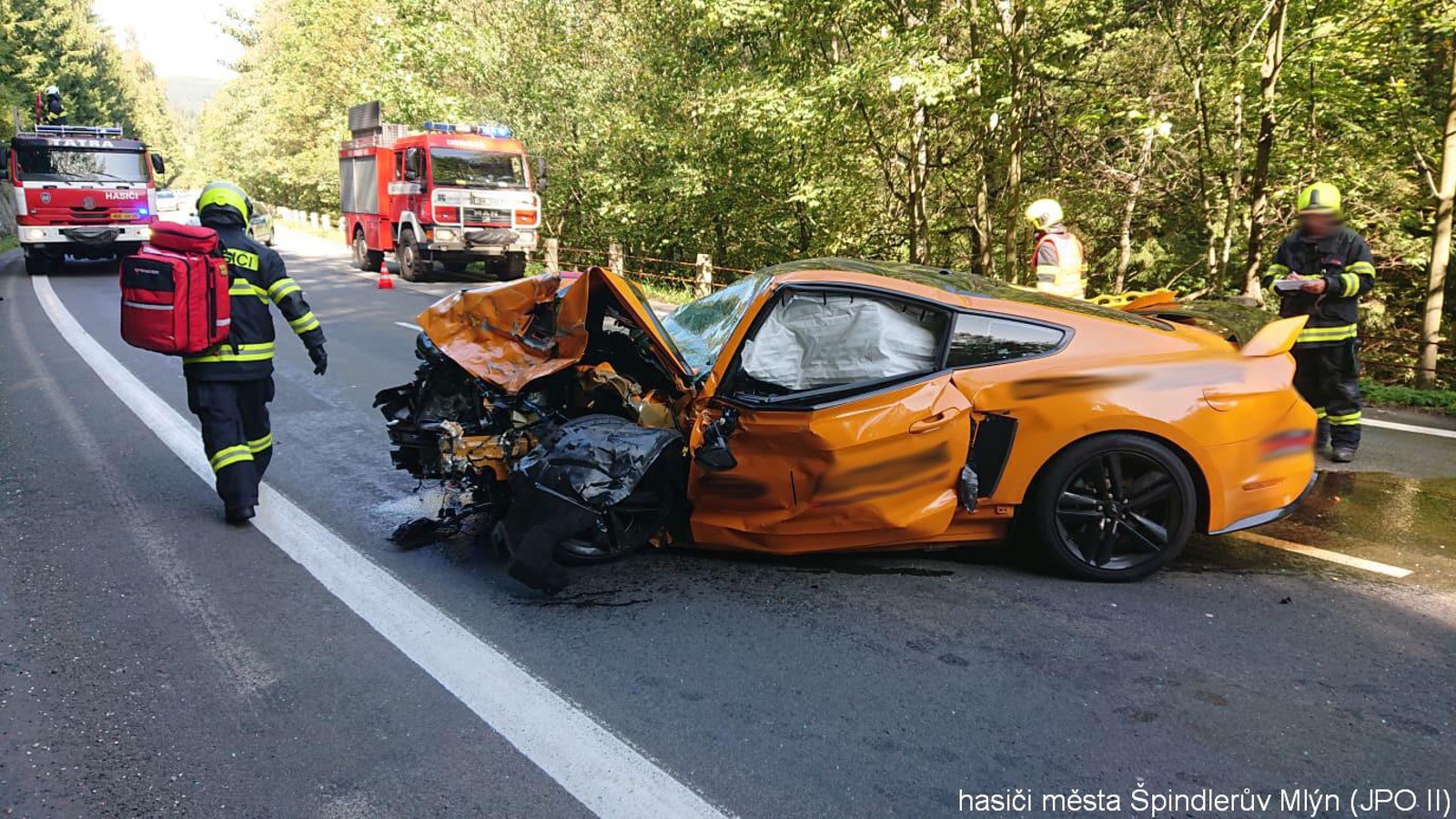

And there are plenty of entitlements you simply have to know about, because the claims adjuster won’t hand you the list on their own. Some items are common knowledge. Some are known only to lawyers. And some have only been confirmed by the courts in recent years. But all of them apply to every no-fault accident on Czech roads.
How It All Works – the Basics in One Minute
When another driver causes the damage, it isn’t them who owes you the money, but their insurer – out of their third-party liability (motor) insurance. In the Czech Republic, every vehicle operator is legally required to have this, and it covers exactly these situations. As the injured party, you deal directly with their insurer (you’ll find it in the accident report or in the central register kept by the Czech Insurers’ Bureau), report the damage and submit your claim. You no longer need to communicate with the at-fault driver.
If the at-fault driver had no insurance or fled the scene, the matter is handled by the Czech Insurers’ Bureau (ČKP) from its guarantee fund. The principle is the same – just with slightly slower paperwork.
And now to the main point: everything you’re entitled to.
Damage to the Vehicle – More Than Just the Repair
1. Repair or Settlement by Estimate
Either the insurer reimburses the invoice from the garage, or it sends you the money (a so-called estimate-based settlement) and you arrange the repair yourself. You’re entitled to both – the choice is yours, not the insurer’s. If you want to preserve the car’s value, be careful: for rentals, leased vehicles or cars still under warranty, a repair at an authorised garage is usually a condition.
2. New Parts Without Depreciation Deductions
For a long time, insurers deducted so-called depreciation from replacement parts – the argument being that a five-year-old car isn’t entitled to a brand-new wing because “it would be upgraded”. The Constitutional Court has repeatedly rejected this approach (among others in ruling I. ÚS 1902/13). You are entitled to be restored to the original condition with new parts if the repair requires it. If the insurer deducts 30% “for depreciation”, you have every right to challenge it.
3. Diminished Vehicle Value – the Most Overlooked Item
This is a claim most people have never heard of. A car that has been in an accident will never sell for the same price as one that hasn’t – even if it’s been repaired flawlessly. That difference between the market value before the accident and after the repair is a real loss, and the insurer must compensate you for it.
This was confirmed by the Constitutional Court in ruling II. ÚS 795/16 (2017) and by subsequent case law of the Supreme Court. The argument is simple – the principle of full compensation. Your financial position has worsened after the accident, and the insurer must put that loss right.
When it’s worth considering this:
- the car is less than 5 years old (ideally under 3 years),
- under 100,000 km on the clock,
- it had no other significant damage before the accident,
- the repair affected the body shell, engine or structural parts (not just a bumper replacement).
Concrete examples from expert appraisals: for a sill repair on a used car, experts assessed a drop in the standard value of around 6%, while for straightening the rear wheel arches and the boot floor on a five-year-old car it was up to 10%. On a luxury car worth 2 million, that means 120,000 to 200,000 CZK that is yours and that the insurer won’t pay out voluntarily until you ask for it – with an expert appraisal in hand.
Important: this claim can be made retroactively up to 3 years from the accident. If someone crashed into you in recent years and nobody flagged this up, it may not be too late.
4. Total Loss – Beware of Undervaluation
If the repair costs more than the value of the car, it’s declared a total loss. At that point the insurer pays the so-called standard (market) value before the accident, minus the value of the wreck. This is where insurers often push the car’s value down. It pays to have:
- your own listings of comparable cars (year of manufacture, mileage, specification) as comparison material,
- records of investments – recent servicing, new tyres, new battery, audio, accessories,
- in case of a dispute, an expert appraisal, which takes precedence over the insurer’s internal calculation.
5. Towing, Parking and Further Storage
If the car is undriveable after the accident, the insurer pays:
- towing from the scene to the garage or to your home,
- parking or storage fees for the time until the adjuster’s inspection is completed and the repair begins,
- if the police arranged the tow and the car ended up on paid premises, these costs are part of the compensation too.
Keep all invoices – without them the insurer won’t reimburse you.
Replacement Vehicle – a Claim Worth Thousands
This is an item insurers are particularly reluctant to pay, because it adds up fast. If your car is in the garage due to an accident you didn’t cause, you’re entitled to the loan of a comparable car for the entire duration of the repair. We’re not talking about a car “just to get around”, but a car of the same category.
What Does “Comparable Vehicle” Mean?
The logic is simple: the insurer must return you to the state before the accident. If you drove a premium SUV, you won’t get a small hatchback. If you have a sports car, you get a sports car. The courts have confirmed several times that “comparable” means a similar class, not merely a functional means of transport.
For How Long?
For the entire time you can’t drive. That includes:
- the time until the adjuster comes and inspects the car,
- the time until the garage orders parts,
- the repair itself,
- in the case of a total loss, a reasonable period to acquire a new car (case law counts in weeks, not days).
What If I Don’t Use the Car for Business?
The claim applies in that case too – private use of the car is a legitimate reason. There are limits, though: if you spent all 14 days of the repair abroad and wouldn’t have used the car anyway, the argument about lost use weakens.
Lost Profit – Crucial for Business Owners
If you use the car to earn a living – taxi, deliveries, trades, installations, haulage – and you can’t work because of the accident, you’re entitled to compensation for lost profit. Not turnover. Not the driver’s wages. The actual profit you missed out on.
What you’ll need:
- tax returns or accounting statements showing your average monthly profit,
- records of orders or contracts you had to decline or postpone,
- a calculation of how many days the car was out of service.
Tip: lost profit can’t be claimed if you took a replacement vehicle and carried on as normal. You claim either a replacement car or lost profit – not both at once.
Items in the Car and Incidental Damage
In a collision, it’s usually not just the bodywork that gets destroyed. The at-fault driver’s insurer must also reimburse:
- a mobile phone, laptop or tablet that got broken,
- a child car seat (after an impact it’s unusable for safety reasons, even if it looks fine – manufacturers state this explicitly in their manuals),
- clothing, glasses, watches, jewellery,
- shopping, suitcases with belongings, sports equipment (bikes, skis, golf bags),
- a pet and related items (carrier, veterinary treatment),
- damaged cargo – often the main item for companies and sole traders.
For more valuable items it makes sense to have proof of purchase. For ordinary ones, photos from the scene and a description are enough. The rule is: photograph everything straight away, however trivial it may seem.
Injury – a Major Chapter in Its Own Right
If the accident also caused injury (even “just” bruises and neck problems), a further list of entitlements opens up. These include:
- Compensation for pain and suffering. In 2026 the point value is linked to the average gross wage, so the amounts rise year on year. A non-displaced leg fracture corresponds to roughly 59,000 CZK; more serious injuries easily reach hundreds of thousands.
- Treatment costs. Co-payments for medicines, rehabilitation, medical aids, transport to the doctor, orthopaedic footwear. Keep all receipts.
- Lost wages or lost profit. The difference between what you would have earned and what sick pay provides.
- Care costs. If loved ones had to care for you (cooking, hygiene, accompanying you to the doctor), their time also has a value that can be claimed.
- Reduction in social standing. In the case of permanent consequences. In 2026 the maximum is around 19.7 million CZK, but it requires an expert appraisal once your condition has stabilised, usually a year after the accident.
- Psychological harm. Post-traumatic stress, anxiety, a phobia of driving. Assessed by a psychologist or psychiatrist.
Important for passengers: you’re entitled to injury compensation even if the accident was caused by the driver of the car you were travelling in – the compensation comes from their third-party liability insurance. This applies between family members too.
Costs of Handling the Claim – the Insurer Owes You These as Well
With larger claims, it may be worth engaging an expert or a lawyer. The good news: these costs are part of your entitlements too.
- Expert appraisal (on the vehicle’s value, on diminished value, on the extent of injury) – the insurer reimburses it if the appraisal was necessary to pursue a legitimate claim.
- Legal representation costs – part of the lawyer’s fee under the lawyers’ tariff. In an out-of-court settlement it tends to be lower than after a court case.
- Travel costs connected with handling the claim (to the police, the garage, the expert) – an often overlooked item, but a legitimate one.
What to Do Immediately After an Accident (Quick Checklist)
- Safety first: hazard lights, hi-vis vest, warning triangle.
- In case of injury, damage over 200,000 CZK or a dispute over fault, call 158. Otherwise a European accident statement will do.
- Take photos. Lots of them. Cars from various angles, number plates, the wider scene, road signs, skid marks.
- Request from the at-fault driver: name, address, phone number, number plate, insurer’s name, green card number.
- Note down contact details for witnesses – ideally with a phone number.
- Report the damage to the at-fault driver’s insurer (not your own, unless your driver was also partly at fault).
- Keep all invoices, receipts and proof of income.
- Before you sign anything with the insurer as a “final settlement”, go through this list. Your signature may close off the path to amounts you didn’t know about.
How We Handle It Here at DREAMRENTAL
If you’ve rented a car from us and someone damages it, you don’t have to deal with it alone. The vehicle is ours, so we handle the communication with the at-fault driver’s insurer, the expert and the garage. All you need to do is call +420 608 982 005 and we’ll guide you through it – what to photograph, what to sign and what you should definitely not sign. The green card, the European accident statement and quick contacts are all in the car.
With premium cars like the BMW M4, Mercedes-AMG GT or Porsche, every day the car sits in the garage is a tangible loss – and all the more reason to see every one of the items above through to the end. We do this often, so we know where insurers are cooperative and where you need to push.
Frequently Asked Questions
Am I entitled to a replacement car even if the damage is only cosmetic?
If you can’t safely use the car (a broken light, cracked glass, a faulty lock, a deformed bumper blocking a wheel), yes. If it’s purely an aesthetic defect and the car drives, the insurer usually won’t pay for a replacement vehicle.
What if the insurer refuses to pay for diminished vehicle value?
Insurers rarely pay it voluntarily. The standard procedure: have an expert appraisal drawn up on the drop in standard value and submit your claim in writing. If the insurer stands by its refusal, you can take the matter to court – case law is clearly on the side of the injured party.
How far back can I make claims?
Generally 3 years from the accident (the limitation period). For hidden consequences of an accident (for example, health problems discovered later), the period is counted from the moment you became aware of the damage.
What if the insurer claims I was partly to blame for the accident?
They have to prove it, not just assert it. Shared fault is typically claimed if you weren’t wearing a seatbelt, rode without a helmet (on a motorbike or bicycle) or failed to keep a safe distance. Even with acknowledged shared fault, you’re entitled to a proportionate share of all the items on the list above, not to nothing.
Can I settle with the at-fault driver without the insurer?
For small amounts of damage under 5,000–10,000 CZK it makes sense – you’ll both avoid a premium increase. But always insist on written confirmation of payment and a description of the damage, otherwise you may find the at-fault driver later denies everything.
Looking for a reliable car rental in Prague that won’t leave you stranded if trouble strikes on the road? Take a look at our range at dreamrental.eu or call +420 608 982 005. Sports, luxury and everyday cars. Round the clock and across the whole of the Czech Republic.